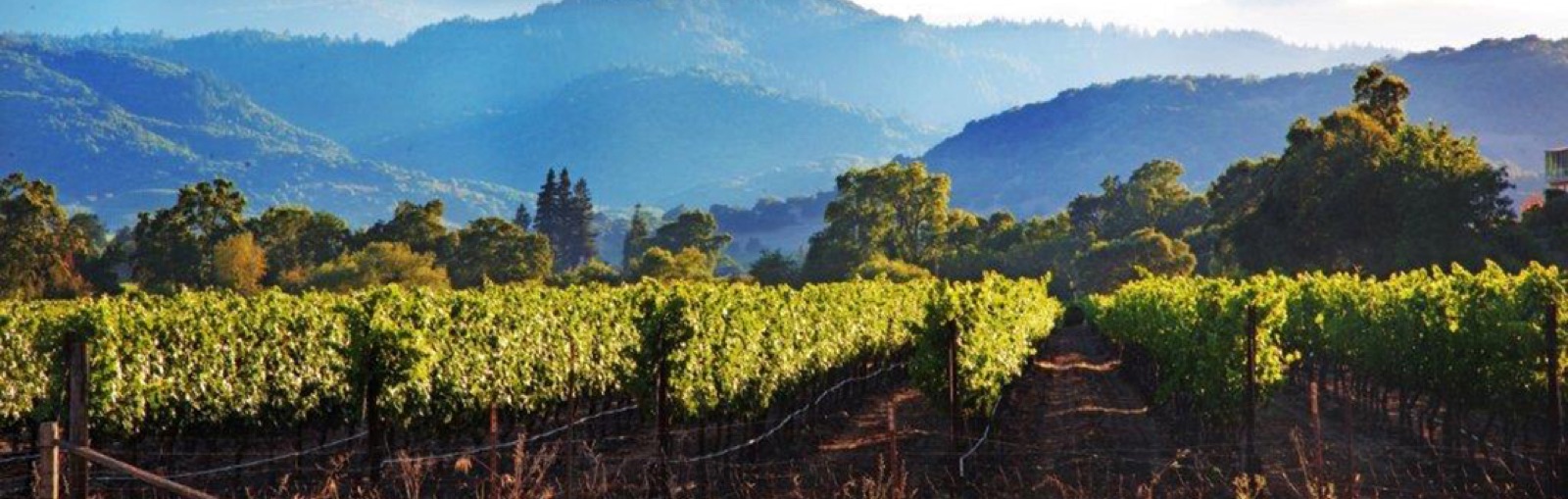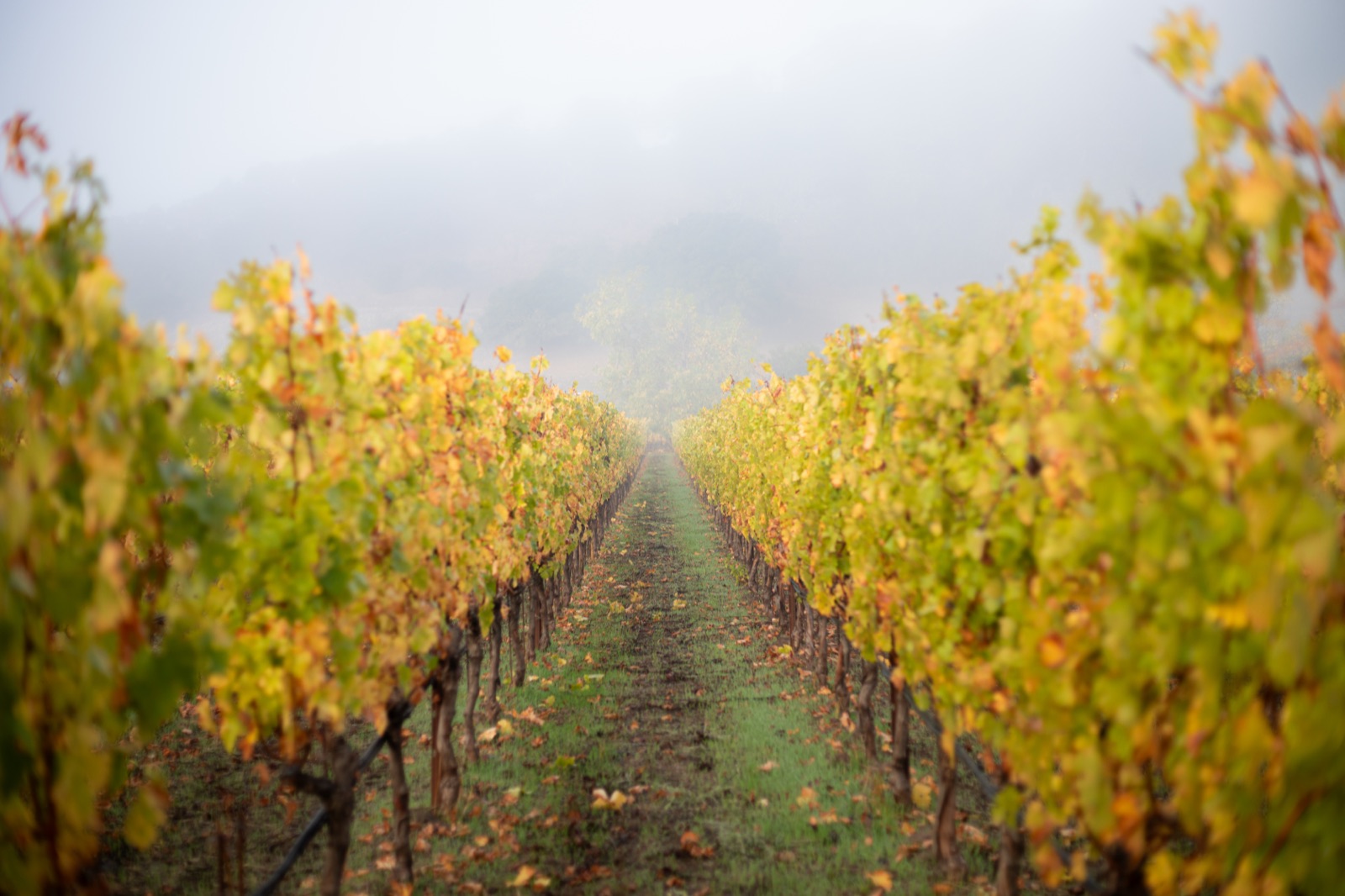
Carneros is easy to drive past if you’re not looking for it. Down at the southern tip of Napa Valley, right where Highway 121 bends toward the freeway, you won’t find the grand gates or big-name estates you see up on the Silverado Trail. What you will find are low, wind-swept vineyards and, most mornings, a sky that stays gray well past breakfast because of the proximity of San Pablo Bay.
But that’s what makes Carneros so special. The fog, the wind, and those cool nights coming off San Pablo Bay aren’t challenges to overcome. They’re exactly why our Chardonnay and Pinot Noir taste the way they do.
Our Honey B Vineyard is where we grow Chardonnay and Pinot Noir for our cool-climate wines. Our main estate is up in Stags Leap District, which is warmer and has volcanic soil. Farming both vineyards in the same year really shows me how different these places are. They might both be in Napa, but sometimes it feels like they’re on different planets.
Where Is Los Carneros?
Los Carneros is the southernmost wine-producing region in both Napa and Sonoma counties, which is the first thing to understand about it: Carneros is not entirely in Napa. The appellation straddles the county line, with roughly half its vineyards in Napa and half in Sonoma. It was established as an American Viticultural Area in 1983, one of the earlier AVA designations in California, specifically because the climate and soils differ so significantly from both Napa Valley proper and the rest of Sonoma.
The appellation sits at the northern edge of San Pablo Bay. The Bay is the engine that runs Carneros. In the mornings, fog pushes inland from the water, cooling the vineyards and keeping temperatures low through midday. In the afternoons, strong winds pick up from the Bay and dry out the air. The combination of fog and wind keeps Carneros significantly cooler than the Napa Valley appellations to the north. On a day when Calistoga at the northern tip of the valley is pushing 100°F, Carneros might be 70°F.
That temperature differential is the entire reason Carneros grows Chardonnay and Pinot Noir instead of Cabernet Sauvignon. Both varieties ripen slowly and do best in cool conditions where natural acidity is preserved. Carneros gives them that, reliably, in ways that the warmer parts of Napa cannot.
What the Farming Looks Like
At Honey B Vineyard, we farm on clay soil. It’s heavy and holds onto moisture, which is a big change from the volcanic and alluvial soils I see in Stags Leap. Clay keeps water longer and drains slowly, so the vines must dig a little deeper for what they need. These soils also warm up more slowly in spring, which changes how the growing season starts.
The wind is always with us here, much more than at our main estate. That steady afternoon breeze from the Bay keeps things cool and keeps the vine leaves moving, which helps with humidity. The fog sticks around longer, too—sometimes it’s still hanging on late into the morning.
Harvest in Carneros comes earlier than in Stags Leap. Chardonnay and Pinot Noir ripen before Cabernet Sauvignon, so we’re often finishing our Carneros picks before we even start picking Cab. The fruit from Honey B comes in with lower sugars and higher acidity than what we see from the warmer Stags Leap blocks. That difference in the grapes is what gives the wines their unique flavors.
That Honey B fruit is what we use for our Carneros Chardonnay, the Elizabeth Pinot Noir, and a small lot of Carneros Syrah each year.
What Carneros Chardonnay and Pinot Noir Taste Like
Simply put, Carneros wines usually have more structure and less weight than wines from warmer parts of California.
With Chardonnay, the cool Carneros climate makes a big difference. Warmer-climate Chardonnays often taste of tropical fruit, feel heavier, and can seem buttery or oaky even if they haven’t seen much oak. Carneros Chardonnay is all about brightness. Think citrus and green apple instead of pineapple or mango, with a leaner body and lively acidity from start to finish. It’s more savory and mineral-driven, and that structure helps it age well. The acidity keeps the wine fresh so that a good Carneros Chardonnay can develop beautifully for five to eight years.
Carneros Pinot Noir has these same cool-climate qualities. The wines show bright red fruit, like cranberry and pomegranate, with silky tannins and a freshness you don’t always find in warmer regions like Russian River or even some parts of Sonoma Coast. Carneros Pinot isn’t about richness or power. If you’re looking for big, dark, opulent Pinots, you’ll find those elsewhere. But if you want structure, length, and a wine that pairs well with food instead of overpowering it, Carneros Pinot is where it shines.
For both Chardonnay and Pinot Noir, the fruit character comes straight from the place itself. Carneros doesn’t need extra oak or winemaking tricks. The climate gives us the acidity and energy we want. My job as a winemaker is to let that shine through, not cover it up.
Carneros Chardonnay vs. Napa Valley Chardonnay
In short, Carneros Chardonnay is leaner, brighter, and more focused on acidity. Napa Valley floor Chardonnay from warmer appellations is riper, rounder, and more tropical. I get this question a lot at the tasting table when we pour our Honey B Chardonnay next to other Napa whites. People notice the difference right away, even if they can’t always say exactly what it is.
The easiest way to see the difference is to try a rich, toasty Napa Valley floor Chardonnay next to a Carneros Chardonnay from the same year. The Napa Valley floor wine will show more tropical fruit, more body, and a rounder feel. The Carneros wine will be leaner, brighter, and more focused. When people taste them side by side, they often call the Carneros version “more refreshing” or “more wine-like,” even if they’re not sure why. That’s the acidity at work. That contrast is what makes Carneros Chardonnay such a great partner for food. The brightness and acidity that might seem bold on their own become real assets next to a piece of halibut or a plate of pasta. Where a rich, low-acid Chardonnay can compete with your meal, Carneros Chardonnay works alongside it.
| Carneros Chardonnay | Napa Valley floor Chardonnay | |
|---|---|---|
| Fruit character | Citrus, green apple | Tropical: pineapple, mango |
| Body | Leaner, more linear | Fuller, rounder |
| Acidity | High, runs through the wine | Softer, less pronounced |
| At the table | Works with food | Can compete with food |
| Aging | Five to eight years in good vintages | Best in its first few years |
The Best Carneros Wineries to Visit
Four Carneros wineries are consistently worth the appointment: Domaine Carneros for the sparkling program and the setting, Artesa for the architecture and views, and Etude and Acacia for serious Pinot Noir.
Domaine Carneros is the visual anchor of the appellation: a chateau-style building inspired by the Champagne house Taittinger (which owns the winery), sitting on a hill above the Carneros vineyards with views south toward the San Pablo Bay. Their focus is traditional-method sparkling wine, and it’s excellent. The Blanc de Blancs is one of the best made in California. They also make still Pinot Noir from estate fruit. The tasting room experience is polished, and the setting is genuinely beautiful. For a first visit to Carneros, Domaine Carneros orients you to the appellation in a way no other property quite does.
Artesa Vineyards and Winery sits on a hillside at the northern end of Carneros, and the winery is partially underground. The architecture is striking: what looks like a grass-covered hill from the approach reveals itself as a modern winery and tasting room. Spanish-owned (Codorníu, one of Spain’s oldest producers), Artesa focuses on Chardonnay and Pinot Noir from Carneros fruit. The views from the property are among the best in the southern part of the Valley. A good stop if you want to pair a serious wine experience with a serious view.
Etude Wines is probably the most wine-focused of the Carneros tasting rooms, and less well-known than it should be. The winery built its reputation on single-vineyard Pinot Noir from Carneros, with the Grace Benoist Ranch providing some of the most distinctive fruit in the appellation. If you’ve been drinking Pinot Noir seriously for a while and want to taste what Carneros can do at the more ambitious end of the spectrum, Etude is the appointment to make. Less spectacle, more wine.
Acacia Winery is one of the original Carneros Pinot Noir specialists, farming in the appellation since the early 1980s. The wines are focused on the cooler blocks of Carneros, and the approach has always been to let the appellation speak rather than impose a house style. A different kind of visit than Domaine Carneros or Artesa: less architectural drama, more about the wines themselves and the history of Carneros as a serious American Pinot Noir appellation.
How to Visit Carneros Wineries
Most people visit Carneros as part of a trip that also includes Yountville or a drive through Napa city. The wineries here are spread out, so you won’t be walking from one to the next. I find that two stops make for a great morning or afternoon—maybe Domaine Carneros for sparkling wine and the views, and then one of the Pinot-focused estates like Etude or Acacia for a still wine experience.
Late spring through early fall is the best time to visit Carneros. The fog and wind are always part of the experience, but the vineyards are at their most beautiful from May to October when the canopy is full. Harvest here usually runs from late August to early October. Since Chardonnay and Pinot Noir ripen earlier than Cabernet Sauvignon, Carneros picks before the Stags Leap Cabernet harvest even starts. If you visit during harvest, you’ll get a real sense of how the season unfolds differently here compared to the warmer parts of the valley.
From Yountville, Carneros is about 15 minutes south. From downtown Napa, it’s 10 to 15 minutes west toward San Pablo Bay. Most tasting rooms require reservations.
If you’re planning a longer trip, our Napa wine tasting guide and first-timer’s winery guide can help you explore the rest of the valley. You can also book a tasting at our Stags Leap estate to compare the warmer side of Napa in the same day. If you’d like to try the wines before you visit, our Carneros bottlings are available in the online shop, with small-lot releases going first to our allocation members.
FAQ
Where is Los Carneros? Los Carneros is the southernmost wine appellation in both Napa and Sonoma counties, located at the northern shore of San Pablo Bay. It sits at the point where Napa and Sonoma counties meet, with vineyards in both counties under the same AVA designation. The town of Napa is about 10 to 15 minutes to the northeast; Yountville is about 15 minutes north. Most locals refer to the appellation as Carneros.
Is Carneros in Napa or Sonoma? Both. Los Carneros is a shared AVA that straddles the Napa-Sonoma County line. Roughly half of the appellation’s vineyards fall in Napa County and half in Sonoma County. Wines labeled “Los Carneros” can come from either county. The appellation is defined by its climate, not its county affiliation.
What grape is Carneros known for? Carneros is best known for Chardonnay and Pinot Noir. The appellation’s cool, fog-influenced climate is well-suited to varieties that ripen slowly and benefit from preserved natural acidity. Cabernet Sauvignon, which dominates the warmer parts of Napa Valley, is rarely grown in Carneros. The appellation is also home to significant sparkling wine production, with Domaine Carneros producing traditional-method sparkling wine from Chardonnay and Pinot Noir grown in the appellation.
What is Carneros Chardonnay like? Carneros Chardonnay is brighter, more structured, and more acid-driven than warmer-climate California Chardonnay. The cool temperatures and Bay fog preserve natural acidity in the grapes, producing wines with citrus and green apple character rather than the tropical fruit and weight of warmer-region Chardonnay. The acid structure also gives Carneros Chardonnay significant aging potential: a well-made Carneros Chardonnay from a good vintage can develop for five to eight years in the bottle.
What is the difference between Carneros and Napa Valley Chardonnay? The primary difference is climate. Napa Valley floor Chardonnay is grown in warmer conditions that produce riper, richer, more fruit-forward wines with less natural acidity. Carneros Chardonnay, grown in a cool, fog-influenced climate at the southern end of the valley, is leaner, brighter, and more acid-driven. Tasted side by side, Carneros Chardonnay reads as more linear and savory; Napa floor Chardonnay reads as richer and rounder. Both styles are valid, but they pair differently with food and age differently in the cellar.
What are the best wineries in Carneros? Four Carneros wineries consistently worth visiting: Domaine Carneros (for sparkling wine and the property), Artesa (for the architecture, the views, and the Pinot Noir), Etude Wines (for serious, wine-focused Carneros Pinot), and Acacia Winery (for one of the original Carneros Pinot programs). Reservations are recommended at all of them.
How do you visit Carneros from Napa Valley? Carneros is a short drive from several Napa Valley bases. From downtown Napa, it’s 10 to 15 minutes west on Highway 121. From Yountville, it’s about 15 minutes south. Most visitors combine a Carneros stop with either a Yountville base or a drive through the city of Napa. The appellation is most naturally paired with a morning of sparkling wine and Pinot before heading north for a Cabernet-focused afternoon.
Does Baldacci Family Vineyards farm in Carneros? Yes. Our Honey B Vineyard is in Los Carneros, where we grow Chardonnay and Pinot Noir. The main estate is in the Stags Leap District, a warmer, volcanic part of the valley with different soils and a different growing profile than Carneros. Farming in both places in the same year gives us a direct comparison of how climate and soil affect the same winemaking decisions made in two very different environments.
When is the best time to visit Carneros? Carneros is worth visiting year-round, but late spring through early fall (May through October) shows the appellation at its most active and most beautiful. Harvest in Carneros typically runs from late August through early October. Chardonnay and Pinot Noir are naturally earlier-ripening varieties than Cabernet Sauvignon, so Carneros picks before the Stags Leap Cabernet harvest begins. Visiting during harvest gives you a sense of how this appellation’s season starts and ends earlier than the warmer Cab-focused parts of the valley.
Michael Baldacci is the Winemaker at Baldacci Family Vineyards, Stags Leap District, Napa Valley.