Here’s the thing most people don’t know about how Cabernet is made: by the time the grapes come through the winery door, most of the important decisions are already made.
While we strongly believe great wine is made in the vineyard, what happens in the cellar also matters. The farming decisions (such as what cover crops grow, when the sheep graze, how the canopy is managed for light exposure, and most critically, when to pick) are where the wine is built. Everything that follows in the cellar is ultimately in service of preserving and expressing what the vineyard has already given us.
Cabernet Sauvignon is made in seven broad steps:
- Pick the fruit when the brix (sugar content), seed color, and skin tannin are ripe.
- Sort and destem the grapes without crushing.
- Cold soak the grapes for about three days.
- Ferment the grapes on their skins for a week to ten days.
- Press the grapes.
- Age the wine for roughly 22 months in mostly French oak (blending trials will shape the final wine).
- And finally, bottle the finished wine, and allow bottle-age to finish the work.
The Growing Season: What the Vine Is Doing Before We Touch It
Cabernet Sauvignon grapes grow on the vine for about eight months. In Napa, bud break typically happens in March. The vine leaves begin to grow, buds flower in May or June, followed by fruit-set. Summer builds sugar, flavor, and tannin in the berries, while ripening toward harvest in September or October.
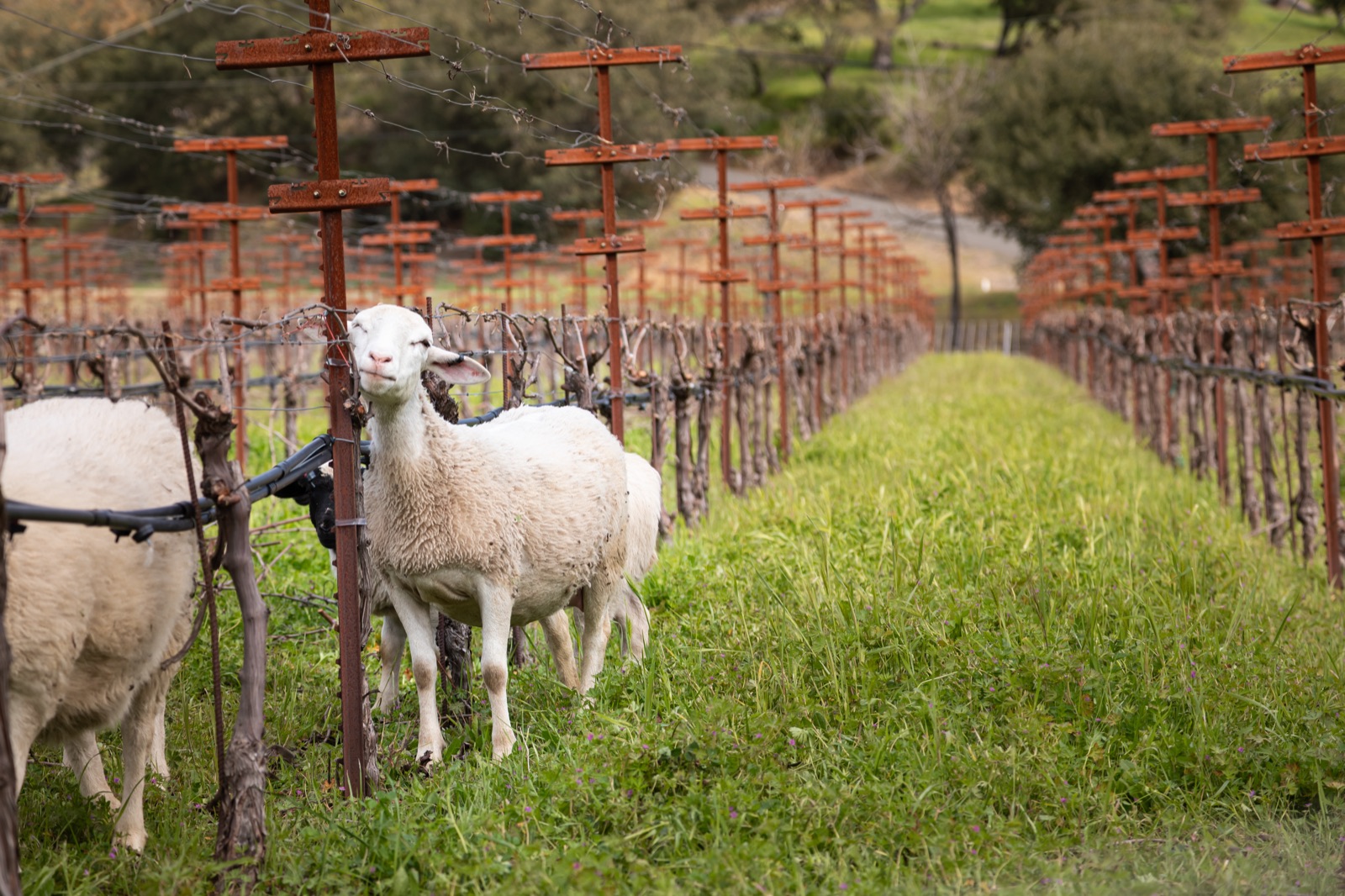
During those months, we’re farming. In the Stags Leap District, where our Baldacci estate vineyards are located, we farm organically: cover crops in the rows, sheep grazing post-harvest to build organic matter and break up the soil, and no synthetic pesticides or herbicides. The health of the soil and the vine affects the quality of the fruit. Healthy vines with good root depth and access to diverse soil biology produce berries with more complexity, and that complexity carries through to the finished wine.
Canopy management matters, too. We’re pruning, shoot-thinning, and leaf-pulling throughout the season to ensure the clusters get the right amount of sun and air exposure. Too much shade and the grapes stay green. Too much heat stress, and they shut down. What we’re optimizing is even, consistent ripening so that all the clusters reach the same place at roughly the same time.
By August, the grapes are entering veraison: the point when the berries change color from green to red, and start accumulating sugar rapidly. From here, the countdown to harvest is on.
When to Harvest Cabernet: The Pick Decision
We pick Cabernet when the sugar, seed color, skin tannin, and weather forecast all line up, not when a single number hits a target. This is the moment I feel the most pressure in the entire winemaking year, because every decision that follows in the cellar is built upon that moment.
Most people assume the pick decision is about reaching a target Brix, which is the measure of dissolved sugars in the grape juice that translates directly to the wine’s final alcohol level. Brix matters, and we track it closely through the season. When the fruit reaches 22° Brix, that is my signal to start tracking the trend of sugar-ripening in earnest, as our fruit must reach at least 24° Brix before picking is on the table. From 22° on, we are taking everything into consideration, but especially the trajectory of the sugar. Is it moving steadily upward? Did it stall? Did it jump? The number tells you where you are and where the fruit is going. We harvest when the fruit hits where we want it.
That being said, Brix is only one input. Once we’re in range, I’m also reading the fruit itself.
Seed color is one of the most reliable signals. Green seeds mean the tannins are still harsh and vegetal. Brown seeds mean the grape is physiologically ripe; the tannins have softened. The difference between a green seed and a brown one in your mouth is unmistakable.
Skin texture and tannin are just as important. I’ll work a berry between my fingers and look at what comes off on my hands. You can see the color extracted from the skins. A rich, deep extraction that comes off cleanly is a good sign. I taste the skin directly. Harsh, grippy skin-tannin means wait. Ripe, silky skin-tannin means we’re getting close.
Then there are external factors beyond human control: the weather we’ve had leading up to this point and the weather that’s coming. A heat spike right before harvest can push sugars artificially high before the skins and seeds are ready. Rain in the forecast can dilute the fruit or cause disease pressure. We’re making a call based on what’s in the vineyard today, what the weather looks like for the next ten days, and what the winery’s logistics allow in terms of receiving and processing fruit. It’s never just one number.
Receiving and Sorting
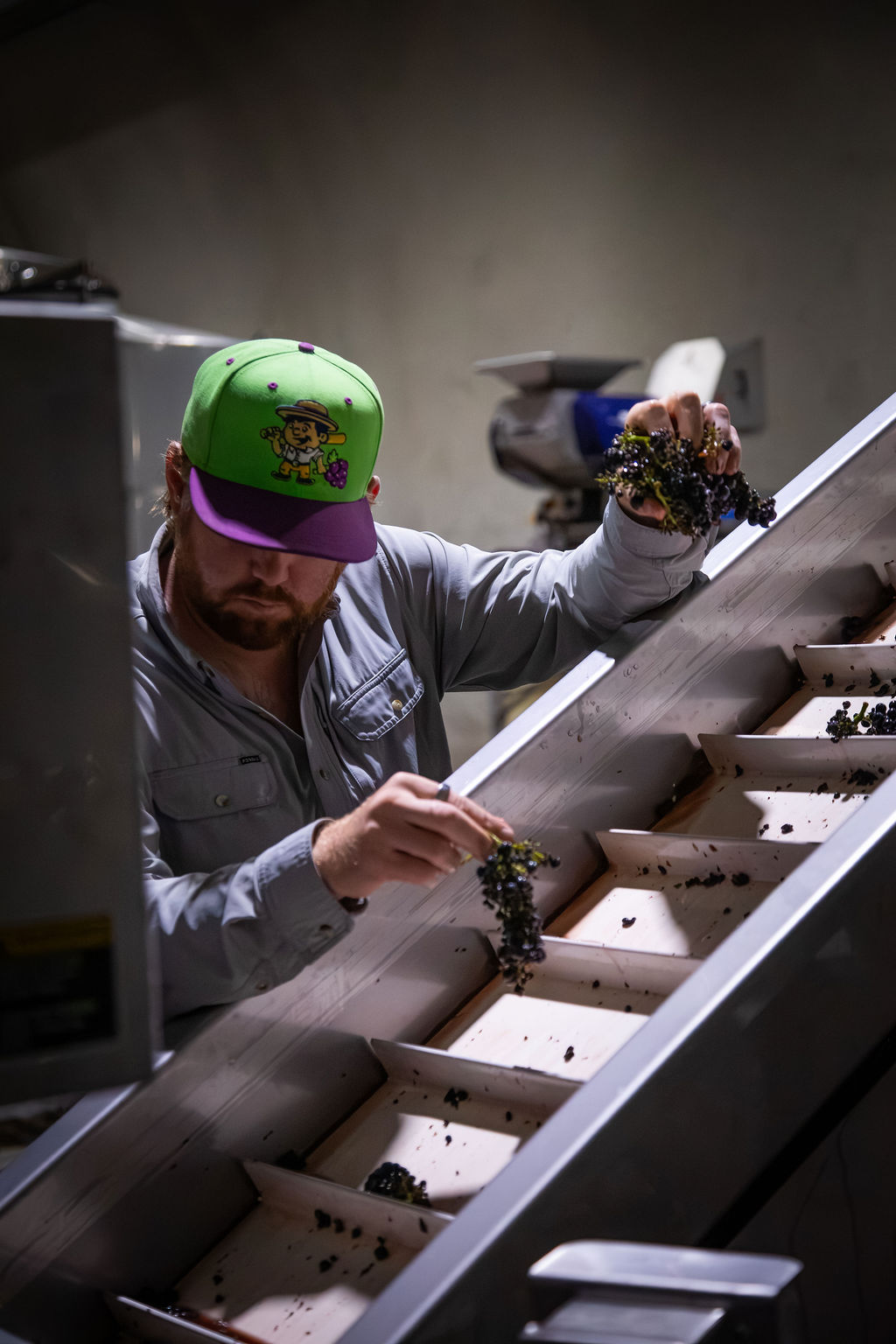
Sorting starts in the field, before the grapes ever reach the winery. The picking crew removes as much green leaf material as possible during harvest, so the fruit that arrives at the winery is already clean.
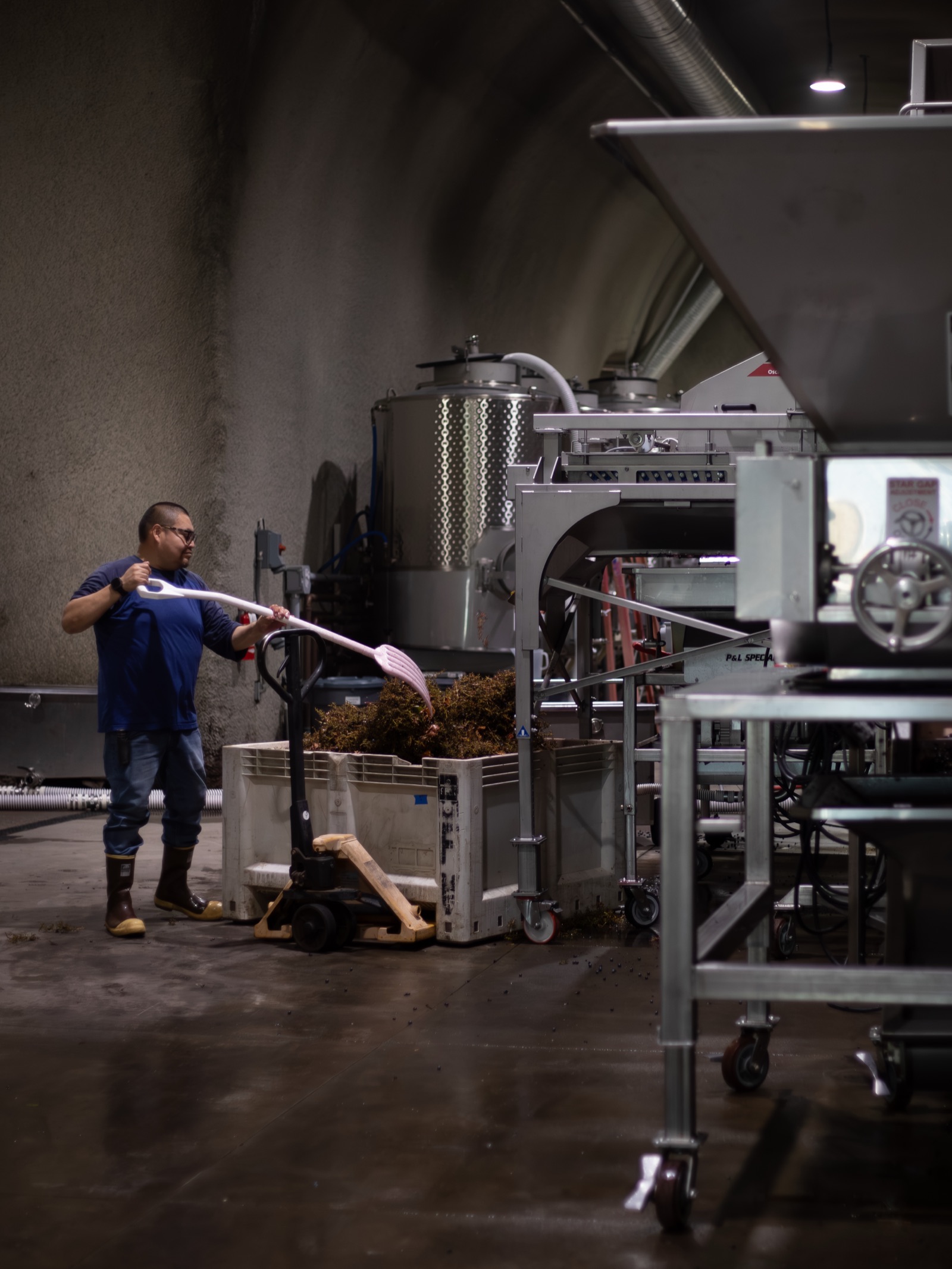
At the winery, the fruit is dropped onto a conveyor and metered onto the destemmer. There is no crushing. The destemmed berries then move to a MOG (material other than grape) sorting line, also called a shaker table, which removes any remaining non-grape material that the field-sort missed. From there, the fruit goes through our WECO optical sorter, which reads each berry individually and ejects anything that doesn’t meet the spec. The optical sorter is one of the more significant quality investments we’ve made at the winery. By the time fruit makes it through, we’re working with only the most exceptional berries.
From there, the berries are gently transferred into fermenters. We use mostly closed-top fermenters, and we size each fermenter to match the specific vineyard block or a specific pick. Keeping individual blocks and picks in their own vessels is how we preserve the identity of each lot through fermentation and into the barrel, which is what gives us real options when we get to blending the final wines.
Cold Soak: Three Days Before Fermentation Starts
Before we introduce yeast and start alcoholic fermentation, we cold-soak the must (newly picked berries) for three days.
Cold soaking works by holding the temperature low enough on the must to prevent fermentation from starting while the juice sits in contact with the skins. The goal is extraction: we’re pulling color compounds and soft, early tannin from the skins before alcohol enters the picture.
This matters because once fermentation is running and alcohol is building in the wine, the extraction becomes more aggressive. Alcohol is a solvent, and it pulls harder and harsher compounds from the skins than the juice does. The three-day cold soak lets us build color and tannin in a gentler way, before fermentation changes the chemistry.
The result is a wine that starts fermentation with more color and tannin structure already, which means the overall extraction during fermentation can be better controlled.
Fermentation
After the cold soak, we introduce yeast, and alcoholic fermentation begins. For Cabernet Sauvignon, this is a warm process by nature. The yeast generates heat as it converts sugars to alcohol, and we manage the temperature to keep fermentation moving steadily without getting too hot. During fermentation, we do punch-downs or pump-overs: physical processes that mix the cap of skins that floats to the top of the tank back down into the fermenting juice. This keeps the skins in contact with the liquid for extraction and manages heat buildup in the cap.
The fermentation itself typically runs about a week to ten days, though that varies with the vintage and the yeast. What I’m monitoring is the rate of sugar conversion (measured in Brix, which drops as sugars convert to alcohol), temperature, and most importantly, what the wine tastes and smells like as it develops.
The wine changes dramatically during fermentation. The first couple of days, it smells like grape juice. Then yeasty, bready notes come in. By mid-fermentation, there’s heat and intensity and something that’s starting to resemble wine. Tasting the wine every day tells you where you are in a way that no numerical measurement is able to capture.
The Press Decision
How long we leave the wine on the skins after fermentation, and when exactly we press, varies from vintage to vintage. There’s no formula. On average, Baldacci Cabernet spends 12 to 21 days on the skins. In certain years and with certain lots, we do an extended maceration that can run 40 days.
Extended maceration simply means leaving the wine on its skins for a little longer after fermentation is complete. That extra time helps build structure while allowing the tannins to soften and become more seamless, giving the finished wine greater depth and a smoother texture. It’s not the right choice every year and not for every lot. But when the structure of the wine supports it, and the vintage has the raw material, 40 days on the skins produces a different wine: more complexity, more density, and longer cellar ageing potential.
What I’m tasting for throughout the fermentation cycle is the tannin structure in the wine at that moment. The question is whether more time on the skins will add to the wine or take away from it. Extended skin contact can build complexity and texture, or it can push into over-extraction, resulting in harsh, drying tannins that don’t integrate. Reading where the wine is on that spectrum, and knowing exactly when to stop, is one of the most important decisions we make.
When the wine is ready, it gets pressed. We separate the free-run juice (what drains off freely) from the pressed wine (what gets extracted under pressure). These typically go into the barrel separately, and we evaluate them throughout the barrel aging process. Some pressed wine makes it into the final blend; and some is added to our Fraternity Red Wine Blend. It depends on the vintage and what the wine needs.
Barrel Aging: 22 Months in Mostly French Oak
Cabernet Sauvignon at Baldacci goes into almost entirely French oak barrels. I do some trials with American oak, but nothing from those trials has made it into our Cabernet portfolio. Sometimes, the experimental lots end up going into our Fraternity Red Wine Blend.
I do this because French oak integrates differently from American oak. Both add tannin, vanillin, and spice to the wine, but French oak tends to add these elements in a way that weaves into the wine’s existing structure. American oak, in my experience with our Cabernet Sauvignon, adds these components on top. The vanilla and coconut notes can dominate in a way that competes with, rather than supports, the fruit and the character that I’m trying to express.
For a Cabernet grown in the Stags Leap District, which already has a naturally elegant, polished tannin profile, French oak is the right match.
The barrels themselves are a mix of new and older oak. New oak contributes the most flavor. The tannin, vanillin, and spice are at full concentration. Older barrels, used in a previous vintage or two, contribute less flavor but still provide the slow micro-oxidation that helps wine develop in barrel. The ratio of new to old oak is something we adjust by vintage, depending on the wine’s structure and what it needs.
Barrel aging for Baldacci Cabernet runs for 22 months. During that time, we taste from the barrel regularly and evaluate how the wine is developing, what’s integrating, and what the wine is becoming. Those barrels rest in our estate cave, and if you want to stand in the room where this part happens, the cave experience at Baldacci walks you through it.
Blending Trials
About two-thirds of the way through barrel aging, we start blending trials. At Baldacci, we have multiple lots from different blocks and potentially different picking dates. Each lot goes through the same process, but tells a different story about the vintage and the site. The blending trial is where we figure out what the final wine is going to be.
What I’m building toward is a complete wine—one that expresses the vintage, vineyard, and expressiveness of Cabernet Sauvignon from a specific place. The structure, aromatics, texture on the palate, and the length of the finish must all work together.
Some lots bring power and density. Others bring aromatics or freshness. The blending trials are about finding the combination of these elements that support each other, rather than compete. I know I’ve found it when the wine no longer tastes like separate components, but a seamless, complete expression. That’s what we’re chasing every year. Some vintages come together quickly. Others, you’re in the blending room for weeks working toward it.
Bottling and the Time After
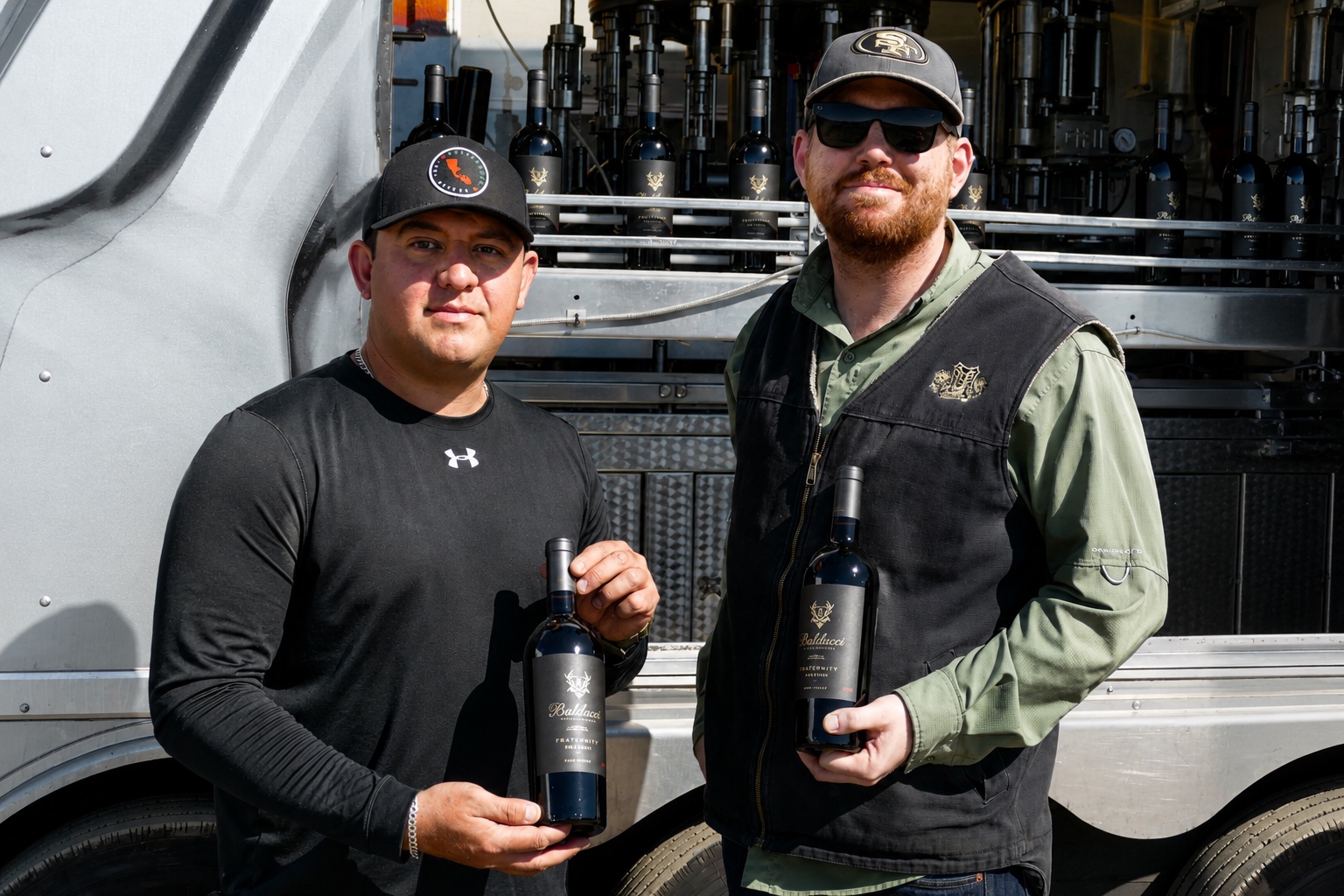
When the blending is done, the oak integration is where it needs to be, and the wine has the structure and development we’re looking for, it goes to bottling.
Bottle aging comes after bottling, and it’s when the wine continues to develop slowly in the bottle as small particles of oxygen work through the wine over months and years.
Young Cabernet Sauvignon, even from a great vintage, often needs time in the bottle before it shows its best. The tannins that feel grippy and assertive at bottling can integrate and soften over two, three, or five years of bottle aging. Aromatics deepen and become more complex.
When you open a Baldacci Family Vineyards Cabernet Sauvignon, you can drink it young. We make sure there’s pleasure in it from day one. But if you have the patience to age it, you’ll taste a different wine. It will be more integrated, more complex, and more resolved. The work that started in the vineyard keeps paying dividends in the bottle for years to come.
How Is Napa Cabernet Different from Bordeaux?
The core difference is climate: Napa’s Mediterranean sun ripens Cabernet reliably every year, while Bordeaux’s maritime climate makes ripeness a vintage-by-vintage question.
Bordeaux is a world-class wine-producing region, but it’s also a challenging climate. The maritime conditions that give Bordeaux its character also create vintage variation that ranges from extraordinary to difficult. The best Bordeaux vintages are among the greatest wines in the world. The difficult years require the winemaker to compensate, to blend, to work with what that season gave them.
Napa has something Bordeaux can’t guarantee, and that’s steady sun. The Mediterranean climate of Napa Valley produces consistent, reliable ripeness in Cabernet Sauvignon year after year. We don’t have to compensate for underripe vintages the way a Bordeaux winemaker sometimes does. That consistency of ripeness is what gives Napa Cabernet its characteristic richness and approachability. The fruit expression is full and confident in a way that reflects the Napa climate.
That doesn’t make Napa better than Bordeaux. It makes the regions different, and how winemakers approach crafting their wines different. Bordeaux has complexity born of challenge. Napa has a different kind of complexity, built on abundance and warmth, and the specific terroir of the valley’s many appellations.
When I’m tasting my own wine against a great Bordeaux, I’m not trying to make a Bordeaux. I’m trying to make a Napa Valley Cabernet or a Stags Leap District Cabernet—wines expressive of their respective regions. Those are different goals, and they should produce different wines.
FAQ
How is Cabernet Sauvignon made? Cabernet Sauvignon is made through a process that begins with harvesting ripe grapes and ends with a wine aged in barrels and then in bottles. The key steps are: sorting and destemming, cold soak (extracting color and tannin before fermentation), alcoholic fermentation on the skins, pressing, barrel aging in oak, blending, and bottling. The winemaking process typically takes around 22 months from harvest to bottling for a serious Napa Cabernet Sauvignon, and the wine continues to develop in the bottle for years after.
What gives Cabernet Sauvignon its flavor? The primary flavor drivers in Cabernet Sauvignon are the grape variety itself (which has naturally high tannin and characteristic cassis, cedar, and dark fruit notes), the terroir where it’s grown (soil type, elevation, climate), the farming practices, and the winemaking decisions (fermentation style, oak type and duration, blending). In Napa Valley, the warm, consistent climate allows reliable ripeness, which produces the rich, fruit-forward character that distinguishes Napa Valley Cabernet Sauvignon.
How long does Cabernet age in a barrel? Quality Napa Cabernet Sauvignon typically ages in barrel for around 22 months, though this varies by producer and style. The exact duration depends on the winemaker’s style and what the wine needs in each vintage. Barrel aging allows slow micro-oxidation that softens tannins and helps integrate oak flavors into the wine.
What’s the difference between French and American oak for Cabernet? French oak tends to integrate into Cabernet’s structure, adding tannin, subtle spice, and texture without dominating the wine’s character. American oak is less common and adds more pronounced vanilla and coconut flavors, and a more assertive tannin contribution. Most Napa Cabernet producers use French oak; the choice affects the wine’s texture, aroma, and how it develops over time.
How is Napa Cabernet different from Bordeaux? The fundamental difference is climate. Napa’s Mediterranean conditions provide consistent sun and warmth that produce reliable ripeness in Cabernet Sauvignon year after year. Bordeaux’s maritime climate creates more vintage variation, which influences winemaking approaches and wine style. Napa Cabernet tends to be richer and more fruit-forward; Bordeaux Cabernet-based wines tend toward more restraint and terroir-driven complexity, partly because of the more challenging growing conditions.
When is the best time to pick Cabernet grapes? The pick decision is one of the most consequential in the winemaking year. The winemaker is reading multiple signals: sugar content (Brix), seed color and taste (green seeds mean harsh tannin, brown seeds mean physiological ripeness), skin texture and tannin, and external factors like weather patterns. At Baldacci, 22° Brix is the point where we start tracking the sugar-ripening trend closely; nothing gets picked below 24° Brix, and the final call rests on the whole picture rather than the number alone. Picking too early means underripe tannins and green flavors. Picking too late means overripe, jammy fruit that loses freshness. The goal is the window where all the elements align.
What is cold soaking in winemaking? Cold soaking is a pre-fermentation technique where the grape must (crushed grapes, juice, and skins) is held at a low temperature to prevent fermentation from starting while the juice sits in contact with the skins. This extracts color compounds and soft tannin before alcohol enters the picture, producing a gentler, more controlled extraction than what occurs during fermentation. At Baldacci, we cold soak for three days before beginning alcoholic fermentation.
From Cellar to Glass
Understanding how a wine is made changes how you drink it. The next time you open a Baldacci Family Vineyards Cabernet Sauvignon, you’ll know how the cold soak contributed to the color, how the French oak added to the texture, and how the pick decision impacted the structure and the finish.
If you’d like to experience those decisions firsthand, our estate tastings offer the opportunity to explore the wines alongside the stories, vineyard practices, and cellar techniques that bring them to life. It’s a chance to see and taste how every step of the process shapes the finished wine.
If you’re planning a trip to wine country, our guide to Napa wine tasting covers how to build a day around it, and our wine allocation program is the way to have access to our wines, vintage after vintage.
Book your tasting at Baldacci →
Explore our Cabernet Sauvignon →
Michael Baldacci is the winemaker at Baldacci Family Vineyards, Stags Leap District, Napa Valley.