Harvest
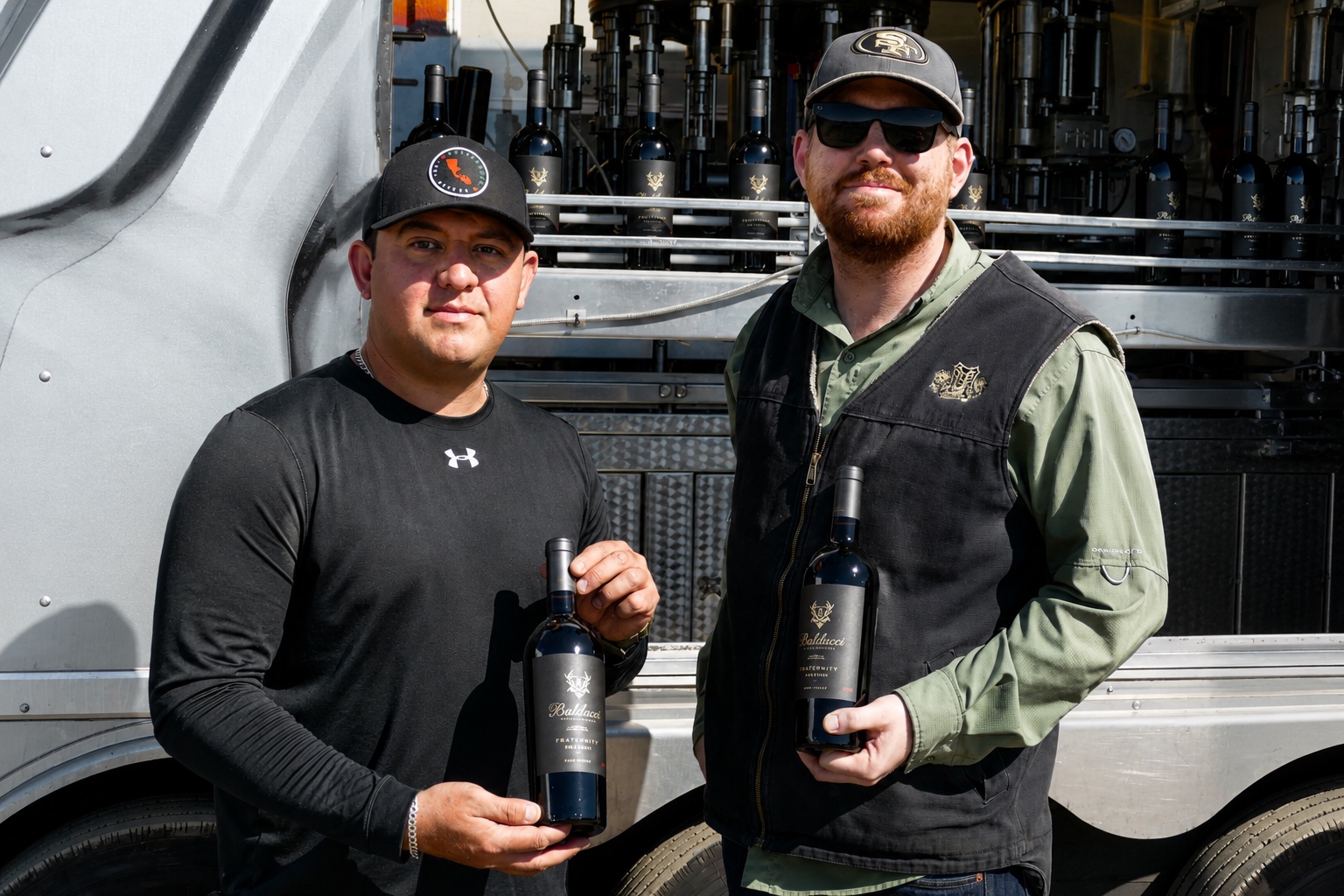
We saw it coming. March arrived with unusual heat, and right away we could tell the whole season was moving ahead of schedule. Budbreak happened early, the vines kept growing, and every sign through the summer backed up what we saw in spring. So, yes, we expected an early start. But expecting it and feeling like it’s normal are two different things. It still feels strange to be bringing in Carneros fruit while the bottling line is just finishing up. This year, we’ll likely have Cabernet picked by early September, which is about as early as I can remember.
The vines don’t pay attention to the calendar, and despite the early harvest, what matters is how the fruit looks. And this year, it looks fantastic.
What Harvest Looks Like
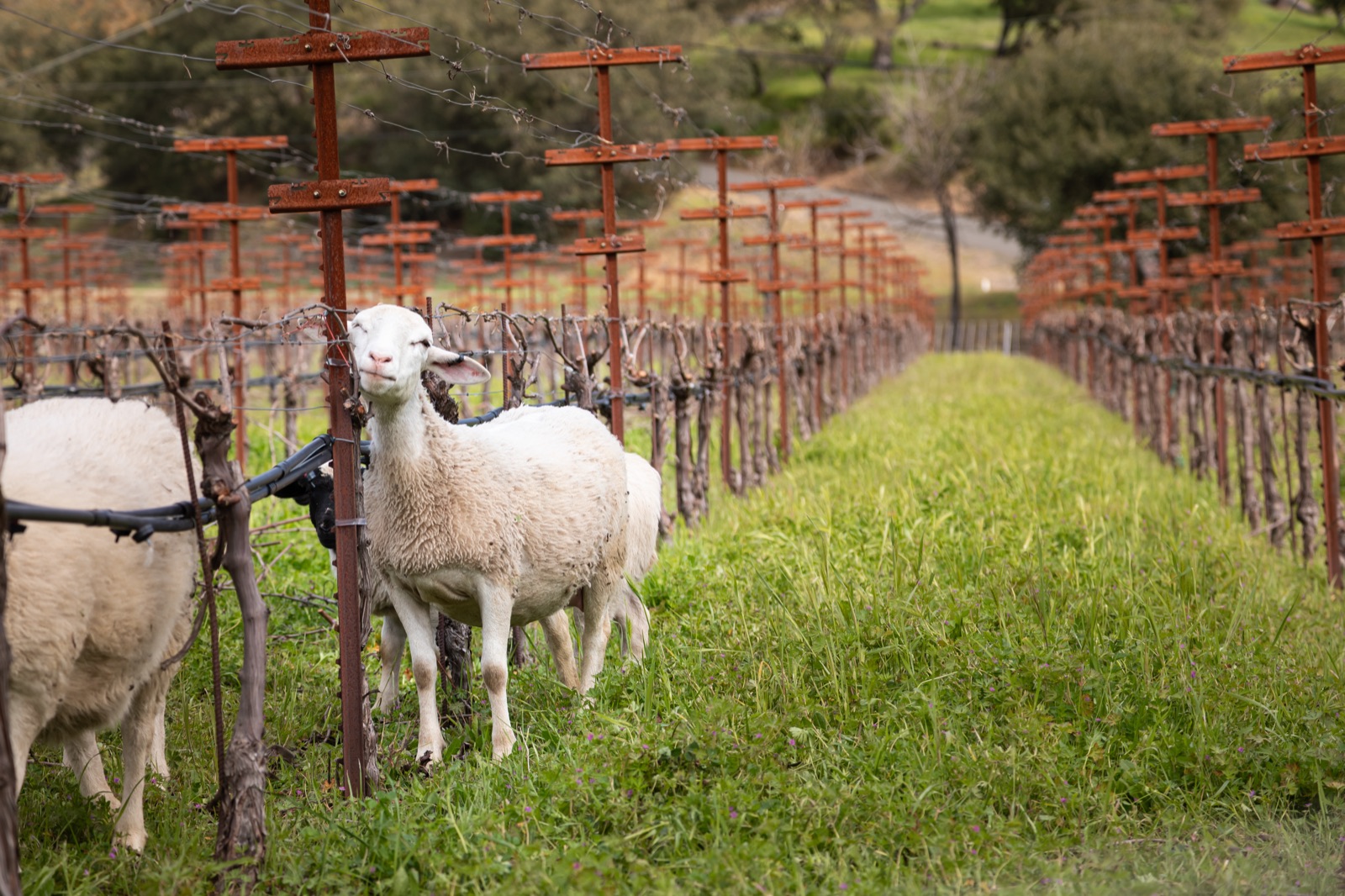
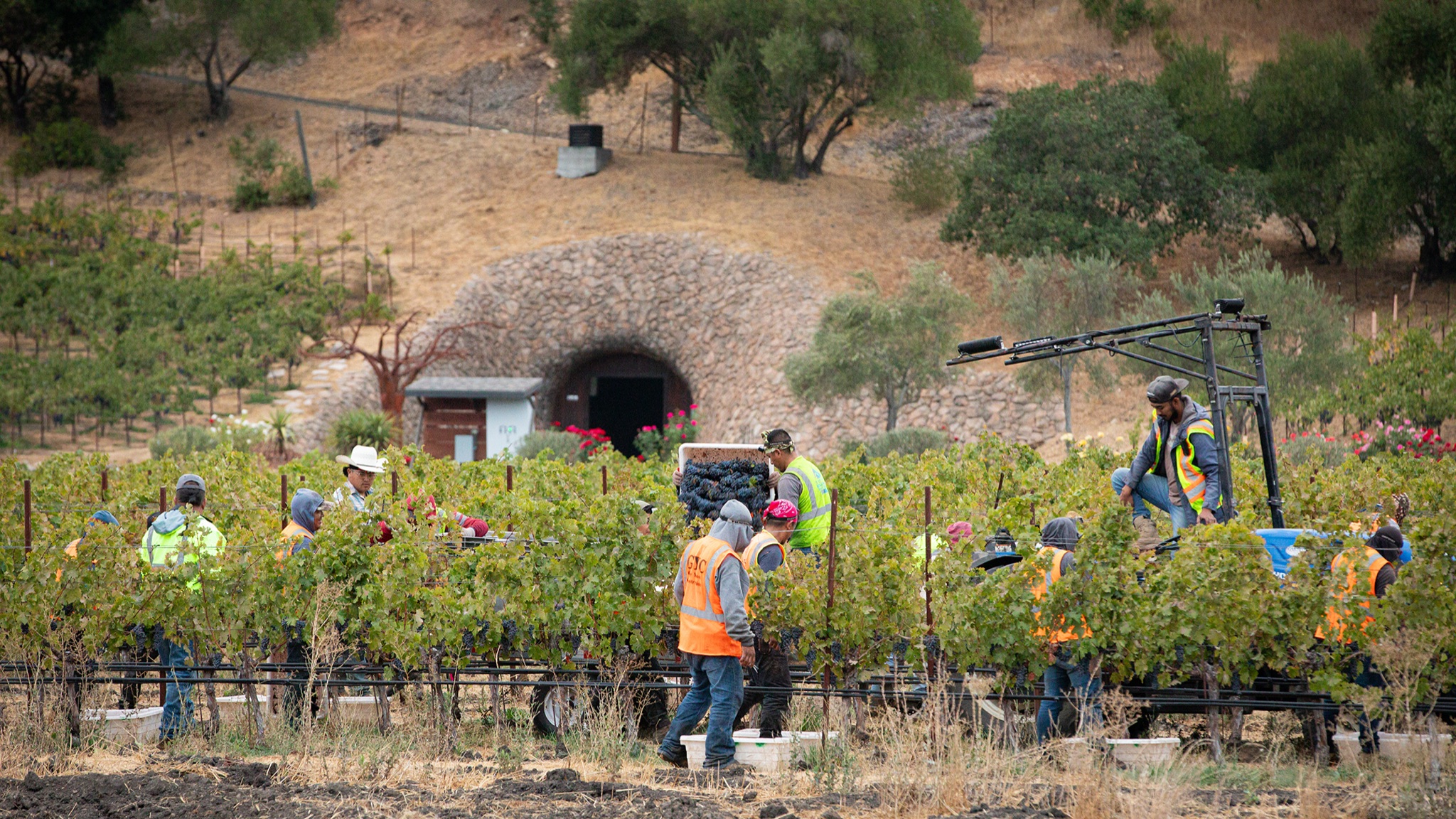
Many people imagine harvest as one big day when all the grapes come in at once. In reality, harvest stretches over several weeks, and every vineyard and even every block has its own timing. Our Carneros vineyard, with its cool mornings and fog from the Bay, ripens much later than Calistoga, where the days are hottest. Stags Leap falls somewhere in the middle. Even within a single vineyard, each block ripens at its own pace, depending on the soil, the amount of sun it gets, and the age of the vines.
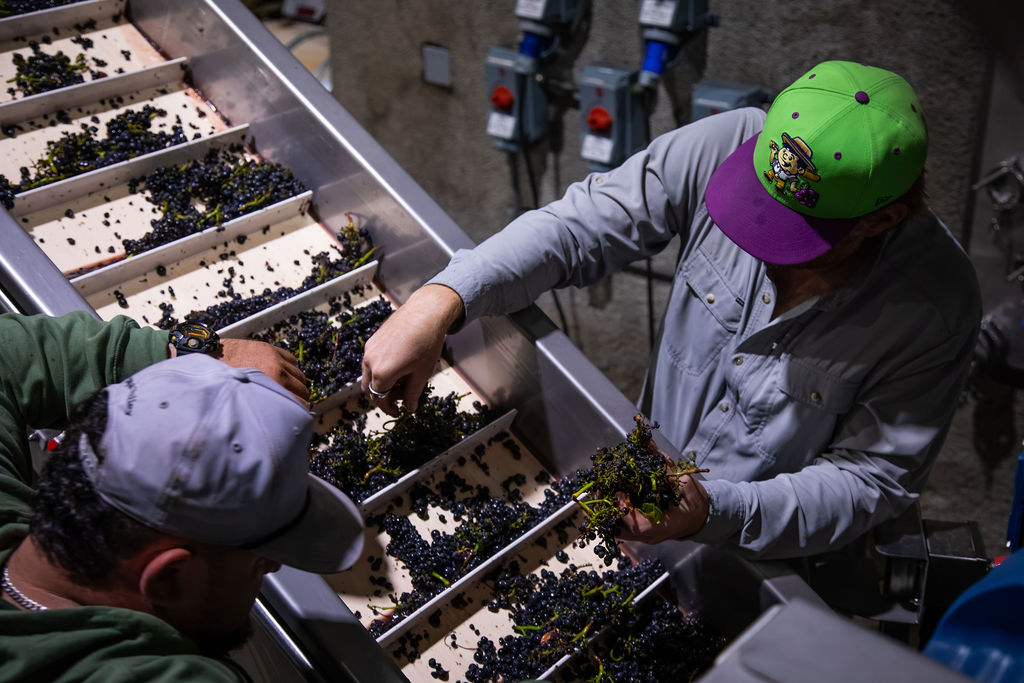
That means harvest is really a series of decisions, one block at a time, one day at a time. We keep track of each block on its own, and we pick when the fruit is ready—not just when it fits our schedule. Some weeks, the fruit comes in almost every day. Other weeks, we wait. The vineyard calls the shots, and we listen.
Making the Pick Call
Deciding when to pick each block is the most important choice we make all year. Once the fruit leaves the vine, there’s no turning back. From that moment on, everything we do in the cellar is about working with what the vineyard gave us that morning.
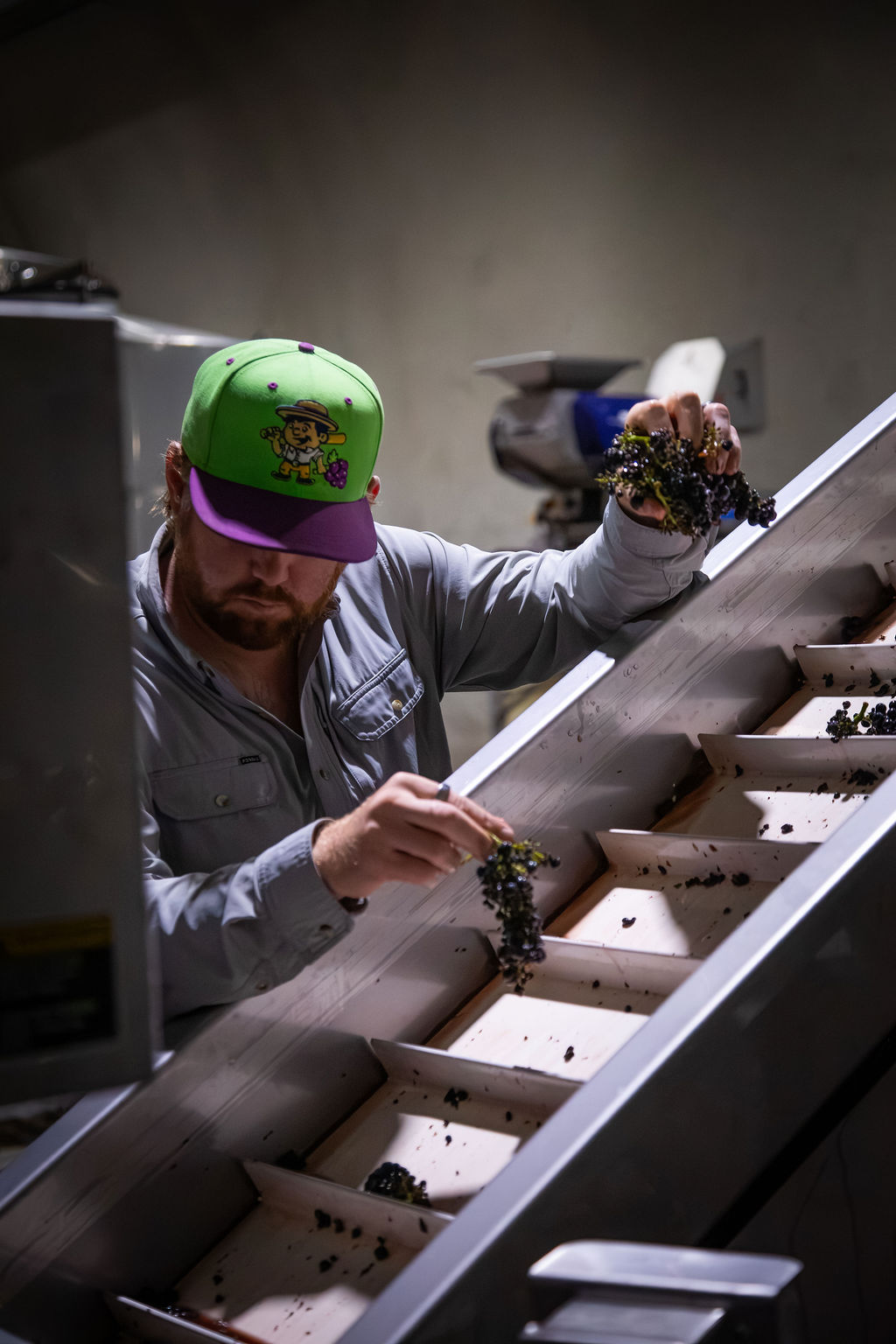
There’s no single answer for when to pick. We look at the numbers on sugar and acid, but those are just part of the story. I spend a lot of time in the vineyard tasting fruit, paying attention to how it feels as much as how it tastes. The seeds are a big clue. If they’re green, the tannins aren’t ready, no matter what the sugar says. When the seeds turn brown and taste nutty, the vine has done its job. The skins tell us how the tannins will feel in the wine, and the flavors hint at where the wine is headed. When the numbers, seeds, skins, and flavors all line up, that’s when we pick.
Why We Pick at Night
We pick all of our fruit at night, striving to have the first bins arrive at the winery by 7 am.
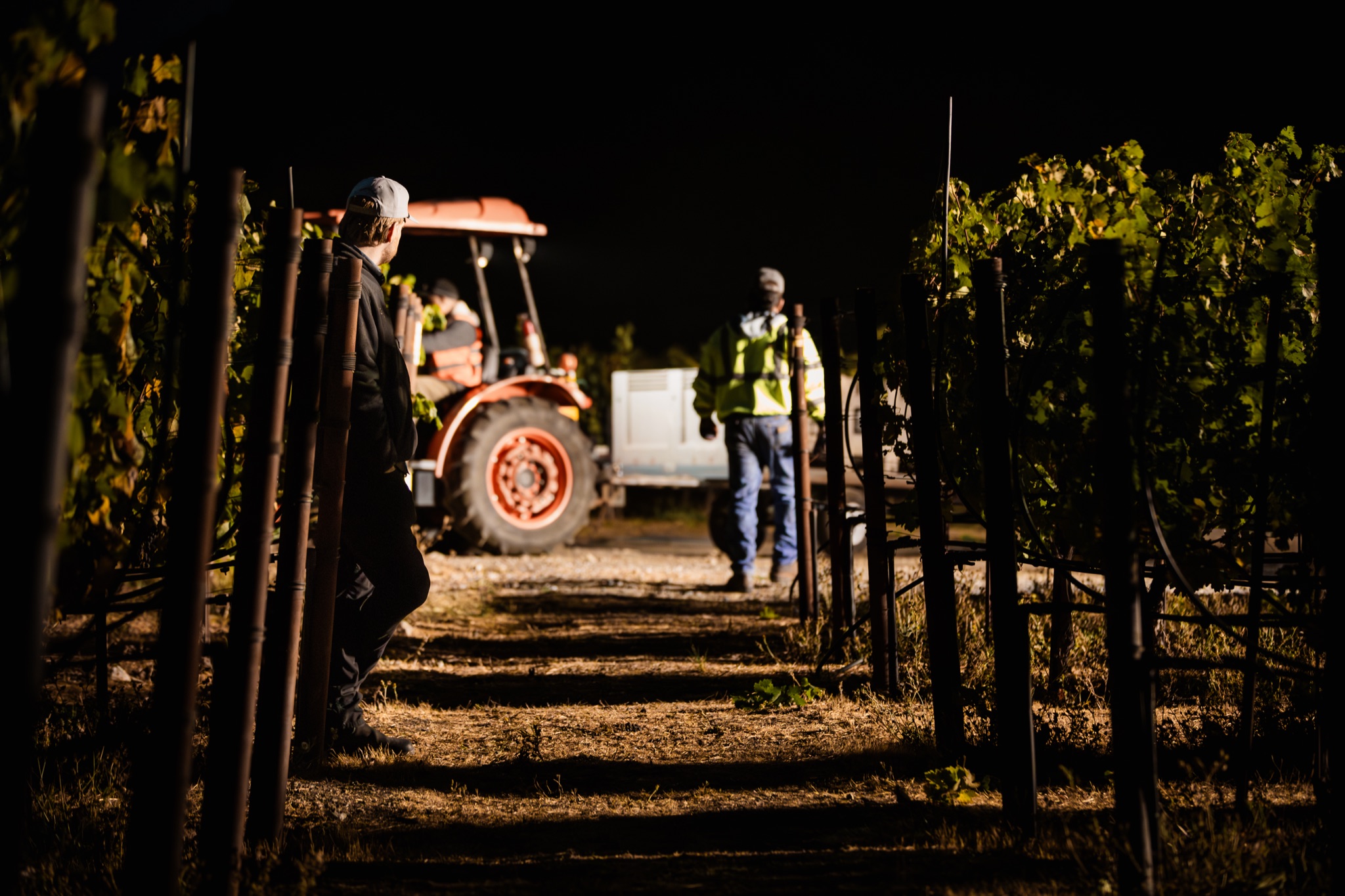
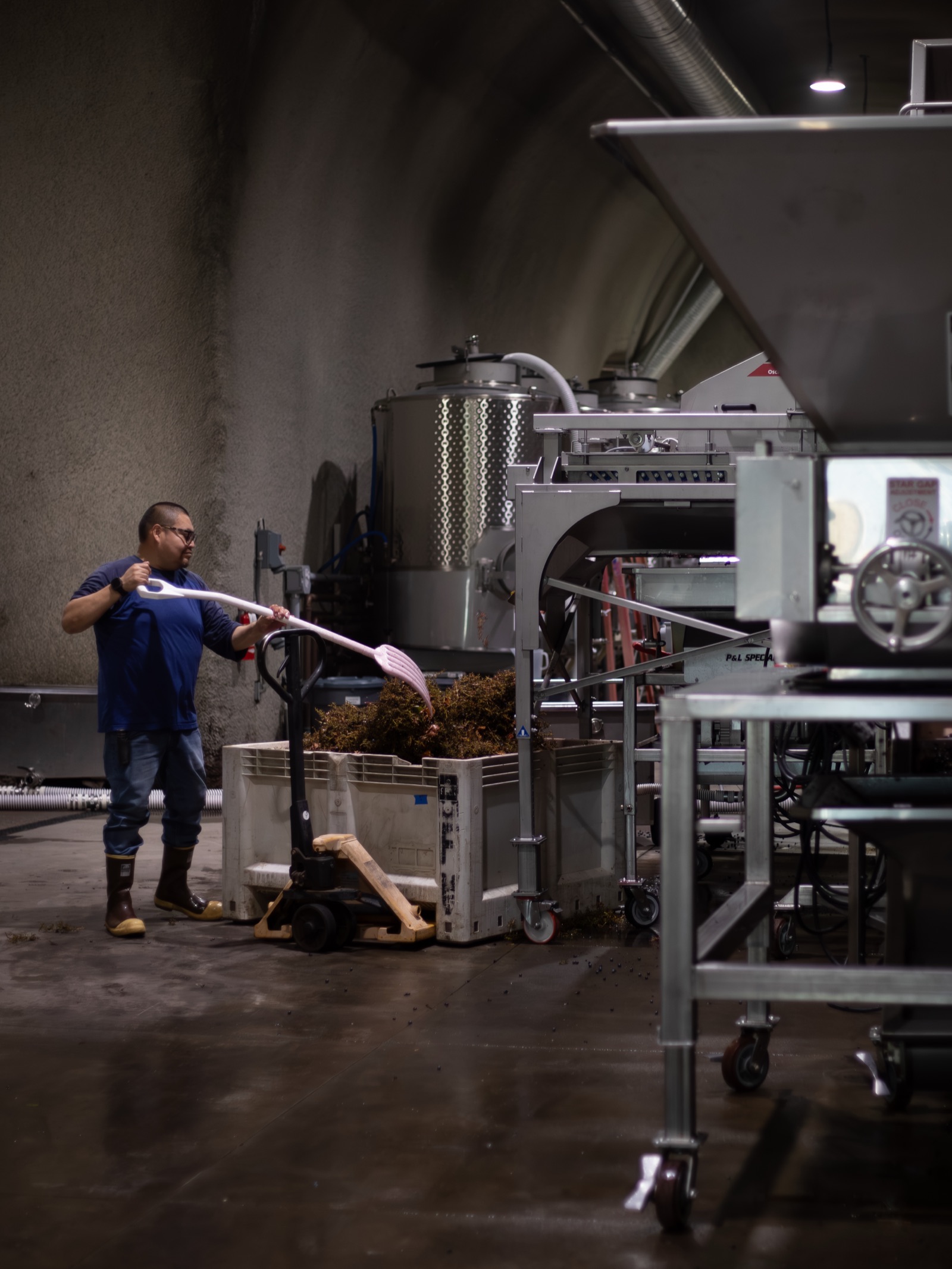
We do this because of the temperature. Cold fruit is stable and gives us more control. When grapes arrive cool from a night pick, we can sort and process them before anything starts happening on its own. If the fruit is warm, fermentation can start before we’re ready, and I want every step to be intentional. So, our crews work under lights in the dark, the bins are filled by the time the the sun rises, and by mid-morning, the day’s fruit is already processed. Seeing those full, cold bins in the early light is one of my favorite moments of the year.
The 2026 Vintage
Every vintage has its own personality, and you get to know it before the wine is even made. You meet it in the vineyard, in the fruit, and in those first tastes at the sorting table. The 2026 vintage is already making an impression, and I like what I’m seeing so far.
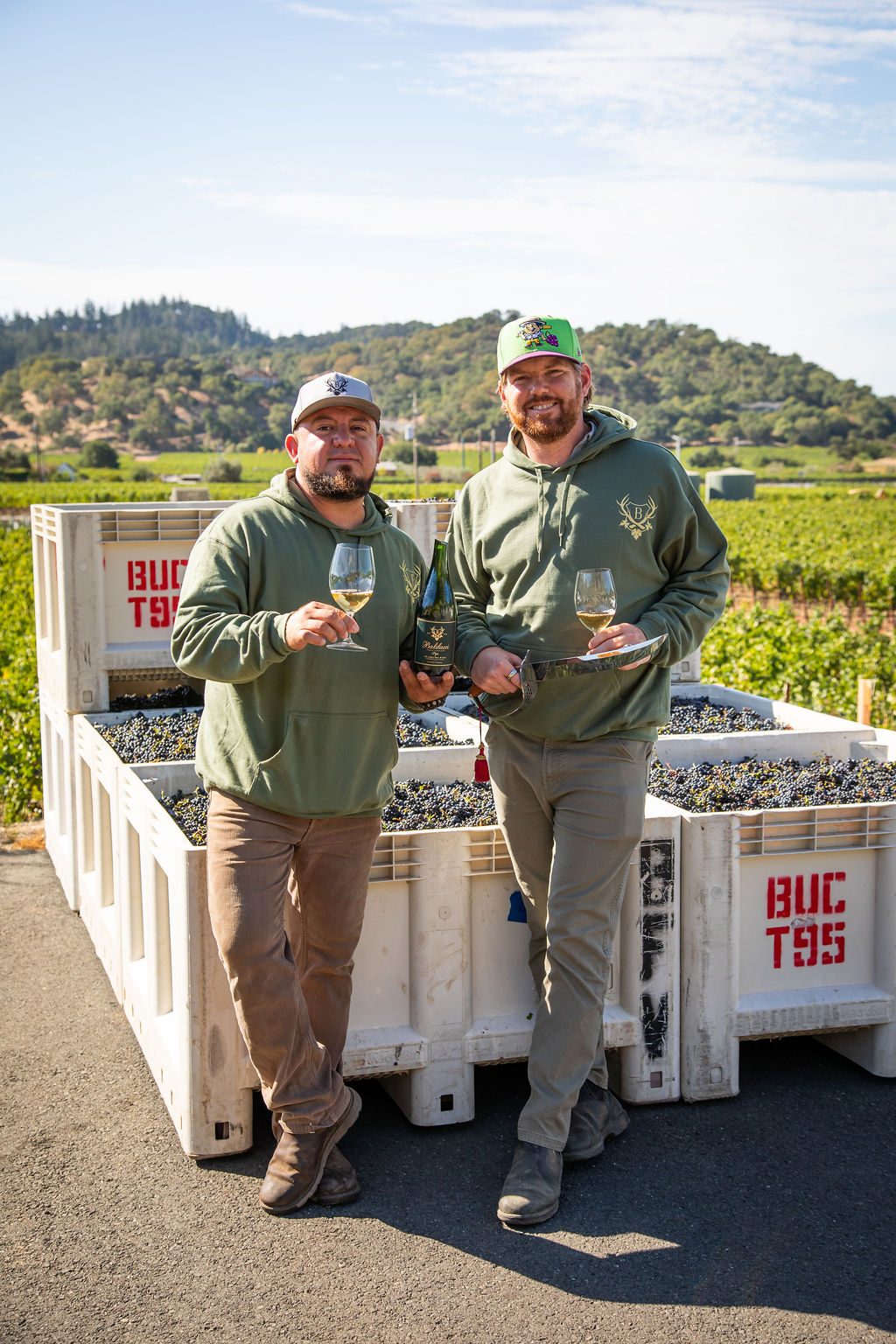
The early season packed a lot into the fruit. What’s coming in has both depth and energy, and the flavors at the sorting table are bright and complete. It’s still early, and I’ve learned not to get ahead of myself before fermentation is finished. However, the raw material is excellent, and that’s always the starting point for great wine.
You can feel the energy in the cellar. Everyone is excited to get going. Last year’s harvest gave us great fruit, but it dragged on and by the end, the whole team was exhausted. This year is the opposite. It’s fast, busy, and full of the kind of energy that comes from knowing the fruit is beautiful and the finish line is closer than usual. Hugo and the crew are in their element, and the cave that was so quiet in July is humming again.
The 2024 Cabernets are resting in the bottle. The 2026 Chardonnay and Pinot Noir are in the fermenters, and more fruit is on its way from our cab vineyards. This is the wheel turning at full speed, and there is nowhere I would rather be.
Michael
Next month: fermentation. The 2026 fruit becomes wine, and the cellar becomes a very busy place.