From the Cellar: The Barrel I Couldn’t Stop Coming Back To
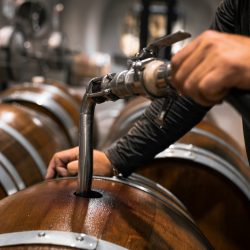
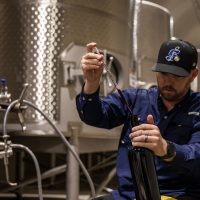
There is one barrel of 2024 Brenda’s Vineyard Cabernet in our cave that I keep coming back to. When I am walking the cellar, tasting lots, and evaluating where the vintage is, this is the barrel to which I am drawn. A few months ago, when we sat down to choose our lot for the Napa Valley Barrel Auction, the decision made itself. This barrel. This wine. The one I cannot stop returning to. The story of why it is the one, and what it took to get a barrel like this into our cave in the first place, runs all the way back to a forest in France.
What June reveals about the vintage ahead
June is when bottling comes into focus. We bottle in August, which means right now, in the cave, every decision is starting to point to that date. We are racking and dialing in final blends. We are making sure nothing in the 2025 lots need attention before the 2024 Cabernets and the 2025 Chardonnays and Pinots come out of barrel to prep for the bottling line. After August, it is harvest. After harvest, it is the next vintage. The wheel keeps turning, and June is the last month of relative quiet before the cellar gets very loud again.
It is also barrel auction season, which is the part of June I want to tell you about. The Napa Valley Barrel Auction is the closest thing our valley has to a working-cellar event for consumers. It is not a polished bottle on a tasting room counter, but wine straight from the barrel, just months from the bottling line—it is one of my favorite days of the year.
What the barrel auction actually is
The Napa Valley Barrel Auction is part of the broader Auction Napa Valley weekend, which raises money for community health and wellness programs across the Valley, with youth wellness as a particular focus. The Barrel Auction itself is consumer-facing. On average, 110 lots in total are presented by winemaker across the Valley for consumers to taste. Each lot is a ten-case offering of a single barrel selection from a participating winery, and the top ten bidders on each lot go home with a case. Some wineries put up wines that are also part of their regular production. Our auction lot is not—the bottle you bring home from our auction lot is a wine you cannot buy anywhere else. We make one barrel for a total of ten cases, that is it.
The day itself is a wine tasting with food at its heart. You taste wine directly from barrels—the kind of unfinished, in-progress wines that almost no one outside the cellar ever gets to try. There is gamesmanship around when to bid, when to hold, and when to jump in late. There is great food, great company, and Napa winemakers and their teams all in one room with people who genuinely love what we do. It is a celebration of what makes this valley work, and the money it raises moves the needle for kids in our community. I do not know a winemaker in Napa who does not take the day seriously, while also still having a blast.
This year, for our auction lot, I am putting up a wine of which I am particularly proud: a single barrel of 2024 Brenda’s Vineyard Cabernet Sauvignon.
A word about the 2024 vintage
Before I get to the specific barrel, I want to say that the 2024 vintage is one of my favorites.
I always think our best vintages have just a touch of heat. Not a brutal heat spike, and not the kind of week that pushes you into emergency picking decisions, but a kiss of it. Enough heat to drive concentration, build tannin structure, and give the fruit that depth that is only possible in Napa when the sun cooperates without overdoing it. 2024 had that. It was the perfect amount of warmth at the right moments.
I would call 2024 a structured vintage. The tannins are rich and present, the concentration is real, and the wines have the kind of architecture that tells you they are going to age for a long time. When I taste through the 2024 Cabernets right now, I keep thinking about how they are going to drink in 2034 and 2044. That is the test for a Stags Leap District Cabernet, the AVA in which our estate-grown Brenda’s Vineyard resides, and 2024 passes it.
Stags Leap District as an AVA does something that I never stop being grateful for. Even when the rest of the valley is going through a hot stretch, we tend to run a few degrees cooler. The morning fog locks into our part of the valley and holds longer than it does elsewhere, which compresses the hottest part of the day. And the afternoon breeze, the one that comes through the gap and down across the vineyards, is the most reliable wind in the valley. In a year like 2024, those slightly cooler temps and breezes are the reason our fruit comes in with both concentration and freshness, and it’s the winning combination every Cabernet winemaker is chasing.
Brenda’s Vineyard, and how this lot was chosen
Brenda’s Vineyard is named for my mother, who, with my father Tom, founded our family winery in 1998. The wine that bears her name is not a single-block selection. It is the best of the best. Every year, we walk the vineyard. We identify the blocks that show the most depth, the most structure, and the most expression of place. Those blocks become Brenda’s. Then, after fermentation and the first stretch of aging, we taste through the barrels from those blocks, and we select the best barrels from that group.
So, a bottle of Brenda’s is already a double selection. Best blocks, best barrels.
The Barrel Auction lot takes it one step further. This is the single best barrel inside Brenda’s, the one I keep coming back to in tasting after tasting. The one that, when I am walking the cave with my thief, I find myself drawn to without thinking about it. This year, that barrel did not require any deliberation. It earned its position by being the wine I quietly visited the most.
The barrel itself
Here is where June connects back to April. The barrel holding this lot is a Tonnelerie Ô barrel, from their single-forest origin program, made from oak grown in the Orléans forest in central France. The Orléans forest is not the same as St-Palais, which is where we were this past April, but it is part of the same French oak tradition, managed under the same ONF framework, harvested under the same multi-century rotation, and worked by the same family of coopers I wrote about last month. Different forests, same care.
This 2024 barrel is built from staves harvested in 2021. The tree was felled three years before the wine ever entered it. Three years of open-air aging at the stave mill, then the trip to California, then the assembly at Tonnelerie Ô’s Benicia cooperage, where Quinn Roberts personally worked with me on the toasting. We landed on a medium-slow toast for this barrel, with a few specific tweaks that Quinn and I have refined together over our eight years working together. The toast level matters because it determines how the wood will give itself to the wine. Too much char and you get coffee and smoke, which is an aggressive char-driven profile that buries fruit. Too little and the barrel never gives the wine the structure and length that French oak is supposed to provide. A medium slow toast, done patiently with the right wood, lets the barrel work with the wine rather than on top of it.
The Master Cooper program is what makes this kind of barrel possible. By going to France, by knowing the forest from which the tree came, and by working with Quinn on the assembly, I can utilize single-forest barrels for specific lots. Most wineries buy from a cooperage in lots. We do, too, for the much of our wine program, but for our top wines like the Brenda’s Vineyard Auction Lot, I want to know more than the cooperage stats—I want to know the forest. The Orléans designation on this barrel means something to me, and it will mean something to whoever wins this lot, when they hear the story.
How I choose barrels in general
Choosing barrels in winemaking does not get talked about enough.
Every year I run a barrel program that must do several things at once but most importantly, it must be consistent. We are a small operation, so I do not have the luxury of running fifteen cooperages and seeing what shakes out. I have to be deliberate. At the same time, I have to keep tasting new cooperages and new offerings, because the only way to find out if there is something better out there is to try. So, the barrel program is a balance, mostly anchored on the forest and the cooper, with intentional room for evaluation.
Right now, we work with about five cooperages. Tonnelerie Ô is 50% of our barrels. The remaining 50% is split across the other four, with some allocation each year held back for new wood trials. We taste through every barrel of our own program each year, and we buy more of what is working. We pull back from anything that is not.
My metric, and I will repeat this because it is the thing I tell every young winemaker who asks, is: I can always add oak. I can never take it away.
We have extraordinary fruit. Our estate vineyards in Stags Leap District, Calistoga and Los Carneros produce wines that I never want to mask. The barrel acts as a frame, not a filter. So, I start conservatively. Fifty percent new oak is my base for the top Cabernets. Through topping over the course of aging, I will usually end up between 65-85% new oak, depending on the Cabernet and how the oak is integrating. Every vineyard site, even individual blocks, takes wood differently. The Stags Leap District blocks ask for one thing, while he Calistoga blocks ask for another; and the Carneros Pinot has its own conversation with oak that is completely different from Cabernet. Matching the wood to the site is what most of our barrel work is, and we re-evaluate it every year because vineyards change, vintages change, and the wines tell you what they need if you taste them often enough.
What this wine is doing right now
I tasted the Brenda’s Vineyard Auction Lot barrel again last week.
When tasting out of barrel, the wine is usually more intense than it will be in bottle. The oak is still present in a way it will not be in eighteen months. The fruit and the wood and the tannin can feel like three things instead of one. Most barrels right now, halfway through aging, are still doing the integration work. They are wines in conversation with themselves.
What I love about the Brenda’s Vineyard Auction Lot barrel is that the conversation is already finished. The wood and the fruit are not arguing anymore. They are saying the same thing. The blue fruit and the silky tannins that I expect from a Stags Leap District Cabernet are there, layered and deep, and the oak is woven through them rather than sitting on top. The structure underneath is patient. The wine already feels complete, and I can tell that it is going to age for decades.
Some wines I taste at this stage, I start composing the blending notes in my head and thinking about which other lots could round it out, what it needs. This one does not need anything except time, and then a bottle.
What I hope the Barrel Auction winners get
If you are one of the ten people who go home with a case of the Brenda’s Vineyard AuctionLot at the Barrel Auction this year, here is what I want you to know:
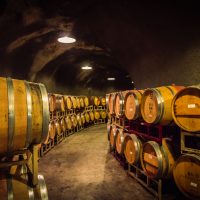
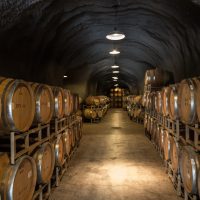
You are getting a wine that started with a tree in the Orléans forest in central France, harvested in 2021 under a forest management plan that began under Louis XIV. The staves were aged in the open air for three years at the Gauthier family’s mill in Méry-ès-Bois. They were shipped to Benicia, California. Master Cooper Quinn and I toasted the barrel together. The fruit came from blocks at our Stags Leap District ranch that I personally walked and selected. The barrel sat in our estate wine cave for 22 months, 55 degrees, quiet. I tasted it more times than any other barrel in the vintage.
Then we put it into 120 bottles, and 12 of those bottles are going home with you.
That is what every great bottle of wine is, on the inside. A long chain of careful decisions made by people who care deeply about each step. Most of the time, those decisions are invisible to the person drinking the wine. With this Auction Lot, because of when you bought it and how you bought it, you get to see the whole chain. You get to know the names. That is the gift of the Barrel Auction format, and it is part of why I think this day is so special.
I hope to see you at the Auction!
Michael
Next month: blending. The most important decisions of the vintage, and the hardest week of the year in the cellar.